This article contains affiliate links. As an Amazon Associate, I earn from qualifying purchases. This comes at no extra cost to you.

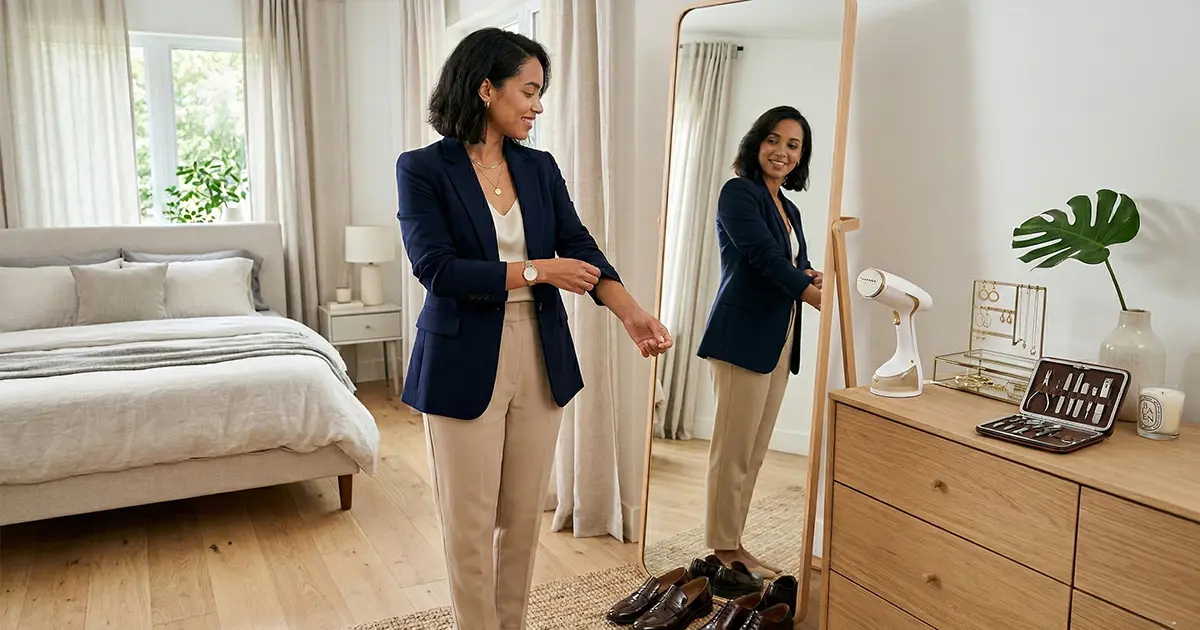
The cover image is for styling inspiration and does not represent a specific brand or product listed below.
Posture & body language awareness plays a quiet but powerful role in how we communicate every day. Before we say a single word, our stance, gestures, and facial expressions already send signals to the people around us. Whether you’re speaking in a meeting, introducing yourself at an event, or having a casual conversation, nonverbal communication can influence first impressions.
Good posture is not about standing stiff or trying to look perfect. It’s about maintaining a natural, balanced position that allows you to move comfortably and stay present. In the same way, body language is not about memorizing gestures. It’s about becoming aware of how your movements, eye contact, and posture support your message.
Many people focus only on what they say. However, how you carry yourself often influences how confident and engaged you appear. Small adjustments like standing upright, keeping your shoulders relaxed, or maintaining steady eye contact may help enhance your overall presence.
Posture awareness is also one of the core principles discussed in our guide on Confidence Habits That Improve Personal Presence: 10 Powerful Changes That Transform How You Show Up, where we explore practical daily behaviors that shape how others perceive you.
In this guide, we’ll explore practical ways to improve posture and body language awareness. You’ll learn simple strategies to build confidence, strengthen communication skills, and develop a more intentional presence in both professional and social settings.
What Is Posture & Body Language Awareness?
What Posture Awareness Is
Posture awareness is the ability to notice and adjust how you hold your body throughout the day. It involves understanding how your head, shoulders, spine, and hips align when you sit, stand, or move. Rather than forcing a rigid position, posture awareness focuses on maintaining a balanced and natural stance.
Modern routines often encourage long periods of sitting, looking down at screens, or leaning forward. Over time, these habits can become automatic. Becoming aware of posture means pausing to check in with your body: Are your shoulders rounded? Is your head tilted forward? Are you leaning more to one side?
Ergonomics research suggests that alignment and positioning can influence comfort, focus, and professional presence. While posture is not about achieving a “perfect” position, increased awareness can help individuals appear more attentive and engaged in various settings.
What Body Language Awareness Means
Body language awareness refers to recognizing the nonverbal signals you send through facial expressions, gestures, posture, and movement. Communication experts widely agree that a large portion of human interaction involves nonverbal cues. These cues often shape how messages are interpreted.
For example, open gestures, steady eye contact, and a relaxed stance can signal attentiveness. On the other hand, crossed arms, limited eye contact, or frequent fidgeting may unintentionally suggest discomfort or distraction even when that is not the intention.
Being aware of body language does not mean controlling every movement. Instead, it means noticing patterns and understanding how they may be perceived by others. This awareness allows for more intentional communication.
Why Posture & Body Language Matter in Communication
Communication is not only about words. Research in social psychology and behavioral science suggests that people form impressions quickly, often within seconds of meeting someone. During these early moments, visual cues play a major role.
Posture and body language can support or contradict verbal messages. For example, speaking confidently while slouching or avoiding eye contact may create mixed signals. In contrast, standing upright with relaxed shoulders and steady eye contact can reinforce a clear and confident message.
In professional settings such as interviews, presentations, or team discussions, nonverbal communication often influences perceptions of leadership, credibility, and engagement. Developing consistent confidence habits can further strengthen these signals, especially when combined with intentional posture awareness. In social situations, it can affect approachability and connection.
How Poor Posture Affects Perception
Poor posture does not define a person’s ability or character. However, certain physical habits may influence how others interpret behavior. Slouching, looking down frequently, or turning the body away during conversation can sometimes be perceived as low energy, uncertainty, or lack of interest.
These perceptions are not always accurate. Someone may simply be tired or distracted. However, because humans rely heavily on visual information, posture can shape assumptions before a full conversation even begins.
Becoming aware of these patterns allows individuals to make small adjustments when needed. Even subtle changes such as lifting the head or relaxing the shoulders may influence how presence is perceived.
How Body Language Influences First Impressions
First impressions often happen quickly and are influenced by visible cues. Eye contact, facial expression, and stance contribute to whether someone appears approachable, confident, or engaged.
An open posture, natural hand movements, and attentive listening signals can create a sense of ease in conversation. In contrast, closed body language may unintentionally create distance.
While no single gesture guarantees a specific outcome, increasing awareness of posture and body language can support clearer communication. Over time, consistent practice can help align physical presence with verbal intention, leading to more effective and authentic interactions.
Using Tools and Books to Support Awareness
Improving posture and body language begins with attention and practice. For many people, simple daily habits such as sitting upright, maintaining eye contact, or observing their stance in a mirror are a practical starting point. Over time, however, some individuals find that additional resources can make the learning process more structured and consistent.
Physical tools may serve as reminders throughout the day. For example, workspace accessories can encourage better screen positioning, and visual feedback tools can help you observe how you stand or move. These items are not substitutes for mindful practice, but they can reinforce awareness during busy routines.
Books can also provide helpful context. Many communication experts and behavioral researchers have written about nonverbal cues, presence, and confidence. Reading different perspectives can deepen your understanding of how body language works in professional and social settings. It can also offer exercises or reflection prompts that support gradual improvement.
Choosing whether to use tools or books is a personal decision. Some people prefer hands-on adjustments, while others benefit from learning the theory behind communication patterns. The key is to view these resources as supportive additions to your practice, not as quick solutions, but as aids that can help you stay mindful and consistent over time. Wearable posture reminders are designed to support awareness rather than physically correct posture.
The Upright GO 2 Posture Trainer
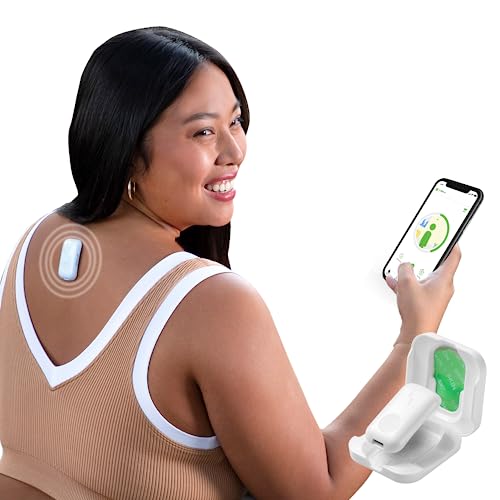
The Upright GO 2 is a wearable smart sensor designed to improve posture awareness through real-time haptic feedback and mobile app tracking. When placed on the upper back, the device delivers a gentle vibration if it detects slouching, serving as a reminder to sit or stand more upright. With its dual-mode system, you can switch between active training sessions and passive tracking to monitor your daily habits and identify long-term posture patterns via the companion app.
1. What It Is
The Upright GO 2 Premium is a small wearable posture trainer designed to attach to the upper back. It connects to a mobile app and is intended to provide real-time posture feedback. When set to training mode, the device delivers a gentle vibration if it detects slouching, serving as a reminder to return to a more upright position. It also includes a tracking mode that records posture data throughout the day for review in the companion app.
2. Who It May Be Suitable For
This device may be suitable for adults who want structured reminders to maintain posture awareness during work, study, or daily routines. It can be considered by individuals who spend extended time sitting at a desk, using a computer, or looking at a mobile device. It is designed for general posture awareness rather than medical treatment.
3. Key Features
- Wearable posture sensor designed for upper back placement
- Bluetooth connectivity with a dedicated mobile app (iOS and Android)
- Training mode with vibration alerts when slouching is detected
- Adjustable sensitivity and session settings within the app
- Tracking mode to monitor posture patterns over time
4. Practical Use Case
The device can be worn during work hours, study sessions, or other seated activities. In training mode, the vibration alert acts as a cue to self-correct posture. Users can review daily posture summaries in the app to better understand patterns and identify times when slouching is more common.
5. Important Considerations
This device is intended to support awareness, not to diagnose or treat medical conditions. Individual experiences may vary depending on consistency of use and personal habits. Users should follow the manufacturer’s instructions for placement, adhesive care, and app setup. It may be helpful to combine use of the device with general ergonomic adjustments and regular movement breaks.
The Fit Geno Back Brace Posture Corrector

The Fit Geno Back Brace is an adjustable support garment designed to provide structured alignment for the upper and mid-back. Featuring breathable mesh material and removable internal support rods, it acts as a physical cue to help maintain posture awareness during long hours of sitting or standing. The unisex design includes customisable straps, allowing it to be worn comfortably over or under clothing as part of a daily routine to discourage slouching.
1. What It Is
The Fit Geno Back Brace Posture Corrector is an adjustable support garment designed to be worn around the upper and mid-back. It is designed to provide structured support and may serve as a reminder to maintain posture awareness. The brace includes internal support elements and adjustable straps to help customize the fit for different body types. It is designed for adult use and can be worn under or over clothing depending on comfort and preference.
2. Who It May Be Suitable For
This brace may be suitable for adults who are looking for added posture awareness during daily activities. It may be considered by individuals who spend long hours sitting, working at a desk, or standing for extended periods. Those seeking external support as a reminder to avoid slouching may find it useful. It is not intended to replace professional medical advice or treatment.
3. Key Features
- Adjustable straps for a customized fit
- Full back coverage design
- Removable internal support rods
- Breathable mesh material for airflow
- Designed for both men and women
4. Practical Use Case
The brace can be worn during work hours, light household tasks, or other routine activities where posture awareness is desired. When worn properly, it may serve as a physical cue to keep the shoulders aligned and the back more upright. Some users choose to wear it for limited periods as part of a broader posture improvement routine.
5. Important Considerations
This product is intended to support posture awareness and should be used according to the manufacturer’s guidelines. Extended wear may not be suitable for everyone. It is advisable to start with shorter sessions and adjust gradually based on comfort. Individuals with existing back conditions should consider consulting a qualified professional before use.
The Berlin & Daughter Adjustable Posture Corrector

The Berlin & Daughter Posture Corrector is a versatile support brace designed to encourage upper back alignment through adjustable shoulder compression. Featuring a unique clavicle-style structure and a dual-position waistband, it allows for a customizable level of pull to suit different comfort preferences. Its lightweight, breathable fabric makes it a practical choice for maintaining posture awareness during desk work, household tasks, or daily walks.
1. What It Is
The Berlin & Daughter Posture Corrector is a wearable back support brace designed to encourage upright posture through adjustable compression across the shoulders and upper back. It features a clavicle-style design and a waistband component that can be positioned in different ways depending on the desired level of shoulder pull. The brace is intended for adult use and is made with soft, stretchable materials for daily wear.
2. Who It May Be Suitable For
This brace may be suitable for adults who want added posture awareness during routine activities such as desk work, walking, or light household tasks. It may appeal to individuals looking for external support as a reminder to avoid slouching. It is designed for both men and women and can be worn under clothing depending on comfort and fit.
3. Key Features
- Adjustable design with two waistband positioning options
- Clavicle-style shoulder support structure
- Stretchable, breathable fabric construction
- Pull-on closure style
- Intended for general back and posture support
4. Practical Use Case
The brace can be worn during work hours, while studying, or during light movement activities such as walking. Users may choose to wear it for limited periods to reinforce awareness of shoulder positioning and upper back alignment. The adjustable waistband placement allows for moderate customization of fit.
5. Important Considerations
Proper sizing is important for comfort and effectiveness, especially for those between sizes. The brace should feel supportive but not overly tight. It is intended to encourage posture awareness and is not a substitute for professional medical evaluation or treatment. Gradual use and periodic breaks may help improve overall comfort.
Overview: You Say More Than You Think
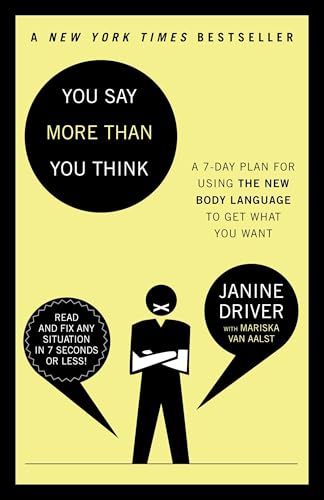
You Say More Than You Think introduces a seven-day framework for mastering nonverbal communication through a deeper awareness of body language and physical cues. Expert Janine Driver explores how subtle shifts in stance, facial expressions, and spatial positioning can significantly influence professional and personal interactions. This guide is a practical resource for individuals looking to align their physical presence with their spoken words to create more impactful first impressions.
You Say More Than You Think by Janine Driver focuses on increasing awareness of everyday body language and how subtle physical cues influence communication. The book presents a structured seven-day framework designed to help readers observe and adjust nonverbal behaviors in professional and personal interactions. Rather than concentrating only on posture, it explores a broader range of signals, including gestures, stance, facial expressions, and spatial positioning.
Readers may learn how small physical shifts such as body orientation, hand placement, or timing of a smile can shape how messages are received. The author also challenges commonly repeated body language advice and offers alternative perspectives based on her professional experience in behavioral analysis. The content includes practical exercises and short-term action steps intended to build awareness over time.
The book may benefit professionals navigating workplace conversations, individuals preparing for interviews or presentations, and anyone interested in understanding how nonverbal cues influence first impressions. It is written in an energetic, conversational style, making complex ideas more accessible to general readers.
For those exploring posture and body language awareness, this book is relevant because it connects physical presence with communication impact. It encourages readers to become more mindful of how their body positioning and movements support or sometimes contradict their spoken words.
Overview: Body Language For Dummies
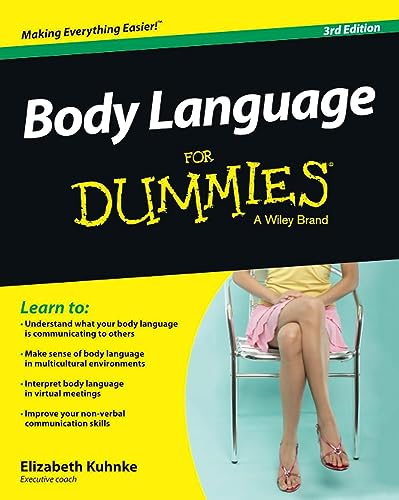
Body Language For Dummies provides a foundational introduction to nonverbal communication, exploring how posture, facial expressions, and gestures shape daily interactions. The book offers practical guidance on interpreting social cues and adjusting one’s own physical signals to better align with professional and personal intentions. This updated edition is a structured, approachable resource for anyone looking to improve their communication awareness in both face-to-face and virtual environments.
Body Language For Dummies provides a broad introduction to nonverbal communication and how it shapes everyday interactions. The book focuses on helping readers understand how posture, facial expressions, gestures, and eye movement influence the way messages are interpreted. It also explores how individuals can become more aware of the signals they send during conversations, presentations, and professional meetings.
Readers may learn how to recognize common nonverbal patterns, interpret social cues more thoughtfully, and adjust their own body language to better align with their intentions. The updated edition includes discussion of virtual communication, multicultural environments, and workplace dynamics, reflecting the realities of modern communication. It also references widely discussed research related to presence and confidence, placing body language within a broader behavioral context.
This book may benefit professionals, students, job seekers, and anyone interested in improving communication awareness. It is especially suitable for readers who prefer structured explanations presented in clear, practical language.
Written in an approachable and organized style, the book breaks down complex concepts into manageable sections. For those exploring posture and body language awareness, it offers foundational knowledge that connects physical presence with effective communication, making it a useful resource for developing more intentional and informed nonverbal habits.
Frequently Asked Questions (FAQ)
What is posture awareness and why is it important?
Posture awareness is the ability to notice how you hold your body while sitting, standing, or moving. It involves paying attention to alignment, shoulder positioning, head placement, and overall balance. This awareness matters because posture can influence how others perceive attentiveness and engagement. In professional and social settings, an upright and relaxed posture can support clearer communication. Posture awareness is not about staying rigid or tense. Instead, it focuses on maintaining a natural, balanced position that aligns with comfort and mobility. Developing this awareness can help reinforce intentional body language habits over time.
How can I improve my body language in everyday conversations?
Improving body language starts with observation. Notice your gestures, facial expressions, and posture during conversations. Simple adjustments such as maintaining steady eye contact, keeping your shoulders relaxed, and facing the person you’re speaking with, can support clearer communication. It may also help to reduce distracting habits like frequent fidgeting or looking at your phone. Practicing in low-pressure situations, such as casual conversations with friends or coworkers, can build confidence. Over time, small and consistent adjustments can make your nonverbal communication feel more natural and aligned with your spoken message.
Can better posture make you appear more confident?
Posture can influence how confidence is perceived. Standing or sitting upright with relaxed shoulders and steady eye contact often signals attentiveness and self-assurance. While posture alone does not define confidence, it contributes to overall presence. Research in communication and social psychology suggests that nonverbal cues shape first impressions quickly. When posture aligns with your message, it can reinforce clarity and engagement. The goal is not perfection but consistency. Practicing balanced alignment and open body language may help you present yourself more intentionally in professional and social settings.
What body language habits matter most in the workplace?
In workplace environments, certain body language habits can influence professional presence. Maintaining an open posture, making appropriate eye contact, and using controlled hand gestures can signal attentiveness and collaboration. During meetings or presentations, facing the audience and avoiding closed-off positions—such as crossed arms—may reduce communication clarity. It is also helpful to remain aware of facial expressions, especially during discussions or negotiations. Workplace body language varies by culture and company norms, so observing the environment and adapting thoughtfully can improve communication effectiveness.
Are tools helpful for improving posture awareness?
Tools can support posture awareness when used thoughtfully. Items such as ergonomic desk accessories, wearable posture reminders, or mirrors can provide feedback and reinforce alignment habits. However, tools are most effective when combined with mindful practice and regular movement. They are not substitutes for personal awareness or professional guidance. Choosing tools depends on individual routines and comfort preferences. Some people benefit from visual reminders, while others prefer wearable cues. The key is consistency and gradual habit development rather than relying on any single device for change.
Conclusion
Posture and body language awareness are practical skills that influence how we communicate every day. From workplace meetings to casual conversations, nonverbal cues often shape how messages are received. By paying attention to alignment, gestures, eye contact, and overall presence, individuals can better align their physical signals with their intentions.
Improvement does not require dramatic changes. Small, consistent adjustments such as sitting upright, relaxing the shoulders, or maintaining open body language can gradually strengthen communication habits. Awareness is the foundation. Once you begin noticing patterns, it becomes easier to make thoughtful corrections when needed.
For those who prefer structured guidance, certain tools and educational books can offer additional support. Wearable reminders, ergonomic accessories, or communication-focused reading materials may help reinforce daily practice. However, lasting improvement typically comes from steady effort rather than relying on a single resource.
Developing posture and body language awareness is an ongoing process. With patience and mindful practice, many individuals find they develop a presence that feels natural and aligned with their communication goals.