12 Minimalist Home Decor: A Slower, Softer Way to Live at Home
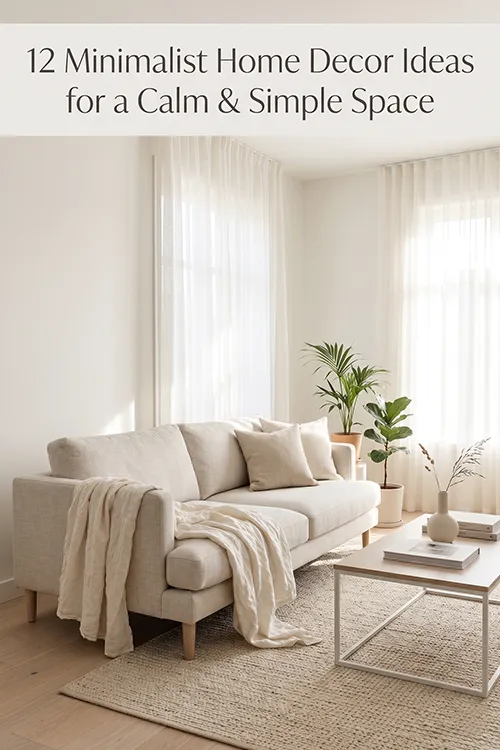
Minimalist home decor begins with a feeling you can’t quite name at first—just a soft sense of ease the moment you step inside. Soft light drifts across open surfaces, the air feels lighter, and your attention isn’t pulled in different directions. Your eyes settle instead of searching. It’s the kind of space that sits at ease without trying, where everything exists in just the right amount for you.
In a home shaped by minimalist home decor, nothing is there by accident. Each piece feels chosen, not accumulated. There’s a subtle balance between what’s present and what’s been gently left out, creating a rhythm that feels natural and unforced. The room doesn’t need to impress—it simply allows you to be.
And over time, that gentle simplicity begins to shift more than just how your home looks. It changes how your mornings start, how your evenings slow down, how your mind moves through the day. Minimalist home decor becomes less about design and more about how it feels to live within it—clear, soft, and quietly yours.
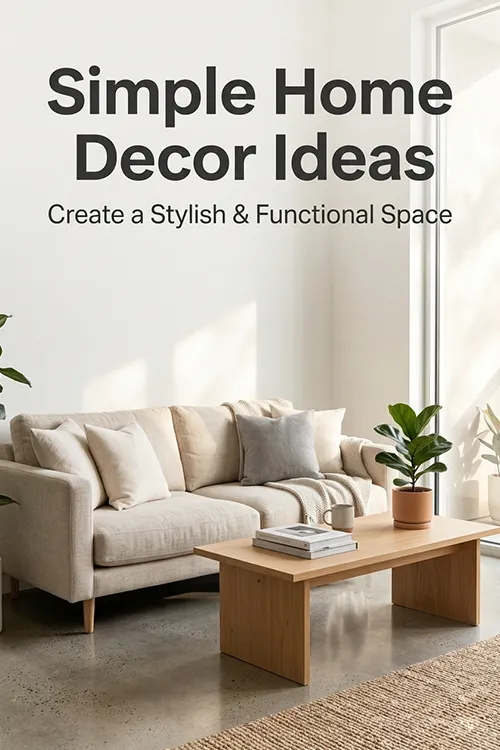
If you’re looking for a more practical starting point, this guide on simple ways to create a stylish and functional space can help you build a clear foundation before moving into a slower, more minimal approach.
1. When Your Space Feels Too Loud
The noise doesn’t always come from outside. Sometimes it’s the stack of things on the table, the crowded shelves, the corners that feel busy even when nothing is moving. Your eyes keep shifting, never quite settling. Even in silence, the room almost seems unsettled—like it’s asking for your attention in too many directions at once.
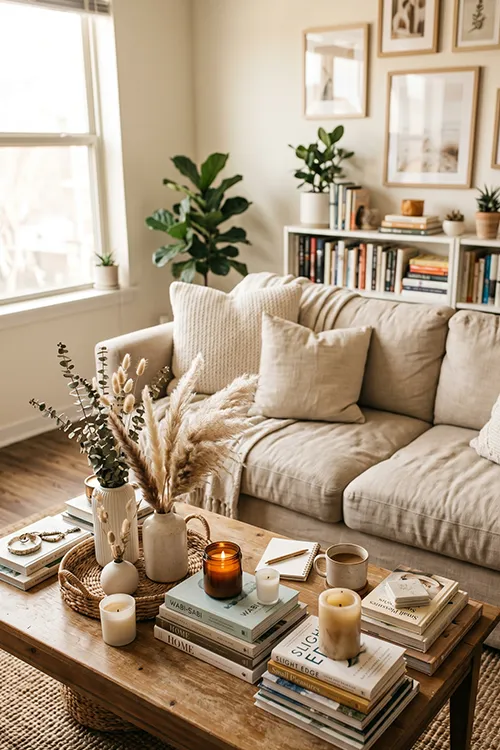
You start to notice it in small ways. Mornings feel rushed before they even begin. Evenings don’t fully soften. You sit down, but something still feels unfinished, unsettled. It’s not about mess—it’s the quiet weight of too much.
This is where minimalist home decor begins—when your space finally lets you breathe.
2. The First Shift: Choosing Calm Over Clutter
It rarely begins with a full reset. More often, it starts quietly—the moment you notice how your space feels and realize you don’t want that feeling anymore. Not louder. Not busier. Not filled just to avoid emptiness. A softer feeling begins to take shape, almost instinctively.
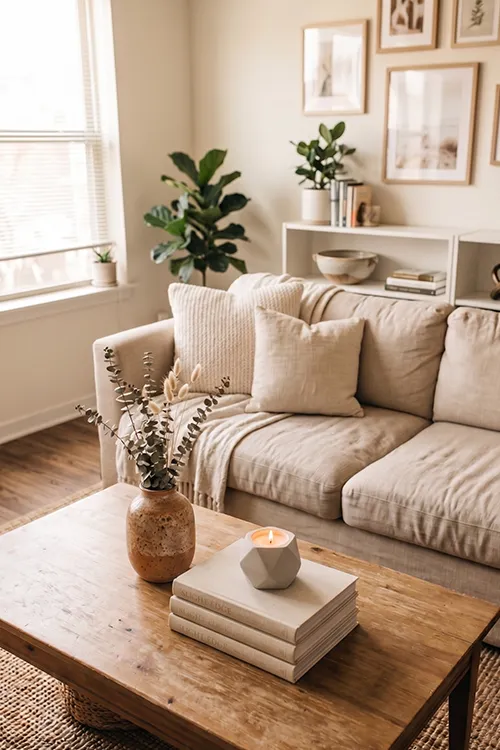
From there, your attention shifts in small, almost unnoticeable ways. You begin to see your home differently—not as something to fill, but something to care for. What remains starts to feel chosen, not random—a chair near the window you always end up sitting in, a surface that stays clear, a corner that finally feels still.
This is the first shift. Gentle, intentional, and just enough to change how everything feels.
3. Editing Your Space Like You Edit Your Life
There’s a subtle kind of honesty in noticing what no longer fits. Not everything needs to be removed all at once—just gently reconsidered. You begin to move through your space with more patient eyes, pausing at what feels useful, what feels meaningful, and what simply stayed out of habit.
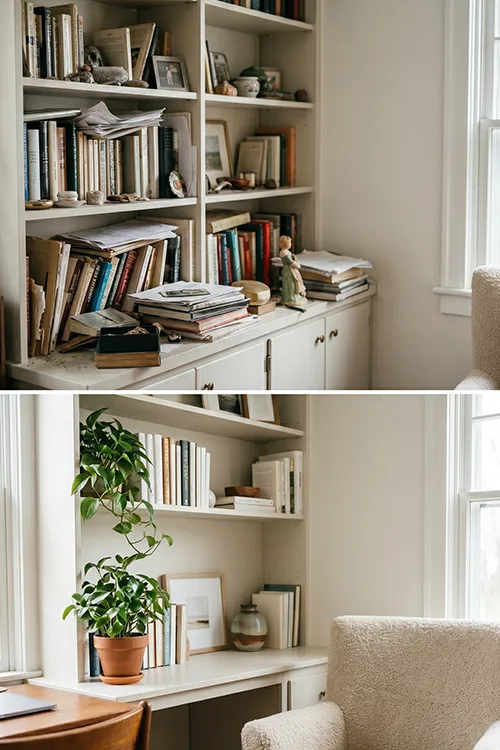
Some things leave without resistance. Others carry small stories, and letting go feels slower, more thoughtful. It isn’t about stripping your home down—it’s about allowing it to reflect who you are now, not who you were holding onto.
What remains starts to feel different. Lighter, clearer, more present. Each piece earns its place, not by filling space, but by adding something simple and real to your everyday life.
4. What Your Eyes Rest On Matters
Your eyes are always searching for somewhere to land. When every surface is filled, they never quite find it. They move quickly, almost restlessly, taking in too much at once. But when a space is open—when a table holds only what’s needed, when a shelf has room around each object—something softens. Your gaze slows. It lingers.
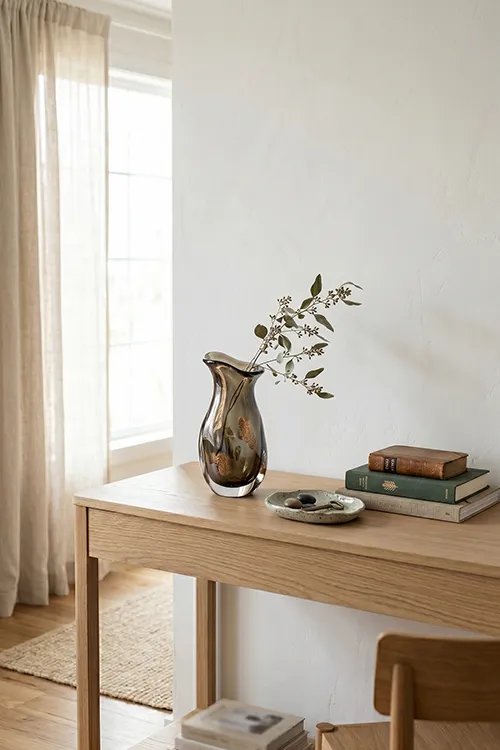
This is where breathing space begins. Not emptiness, but open space between things. Your mind reads that space as ease, as something you don’t have to think through, as permission to pause. In minimalist home decor, what’s left untouched carries just as much presence as what remains, shaping how the room feels without needing your attention.
A simple minimal coffee table tray can create that same sense of visual pause—keeping just a few items in one place instead of letting everything spread out.
5. A Color Palette That Feels Quiet
Color doesn’t have to speak loudly to be felt. In a quieter palette, tones seem to settle into the room rather than sit on top of it—soft whites, warm beiges, muted earth. Your attention isn’t pulled in different directions; everything sits gently connected, like the space isn’t in a hurry anymore.
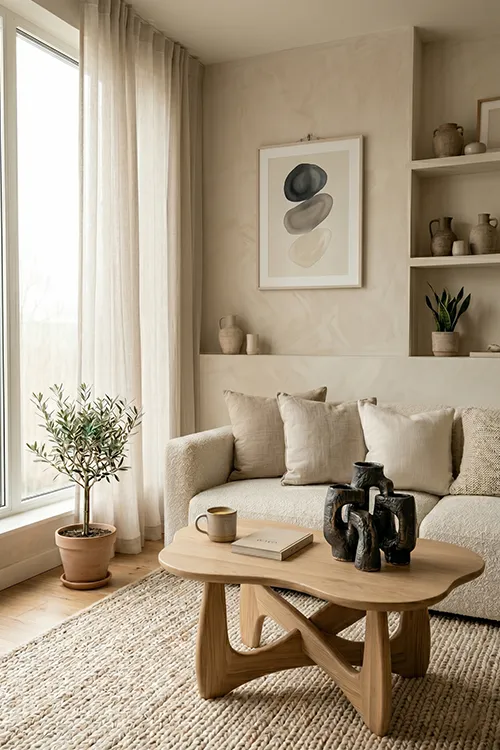
These shades don’t demand a reaction, and that’s exactly why they work. They soften the edges of the day, ease the transition from morning light to evening calm, and create a backdrop that doesn’t interrupt your thoughts. Steady. Grounded. Like you don’t need to rush through it.
In minimalist home decor, color becomes less about choice and more about atmosphere—something you sense before you even notice it.
Even something like a neutral area rug can help tie those tones together, giving the room a grounded, cohesive feel without adding visual noise.
6. Texture: The Detail You Feel Without Noticing
When a space grows more still, your senses begin to notice different things. Not what’s there, but how it feels. The softness of linen against your skin, the gentle grain of wood under your hand, the cool, matte surface of a ceramic piece resting on a table. These details don’t ask to be noticed—they just stay with you.
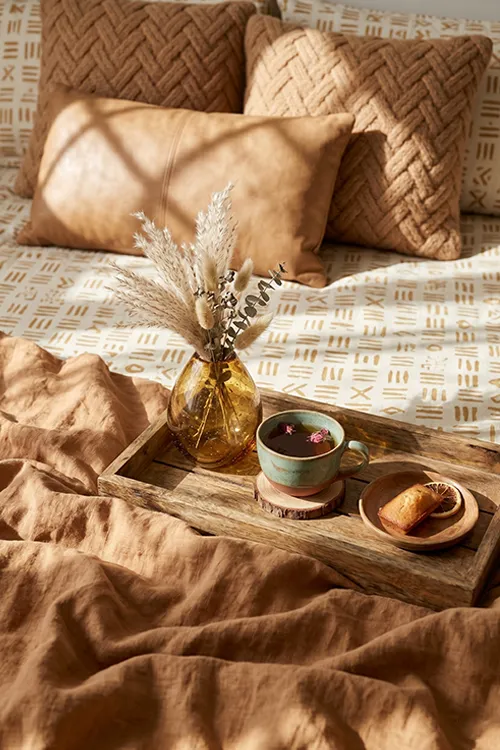
Texture brings warmth without adding noise. A simple throw draped over a chair, a woven basket tucked into a corner, a handcrafted vase catching soft light—each one adds depth in a way that feels natural, almost effortless. Everything sits easily in place, without feeling incomplete.
You experience it first. Only later do you notice it. At first, you simply feel it. Soft layers that make the space feel lived in, not just styled.
A soft linen throw blanket draped over a chair adds that layer of comfort without making the space feel heavy or crowded.
7. Furniture That Doesn’t Compete
There’s a different kind of presence when a room isn’t filled to its edges. Each piece of furniture has room to exist without interruption—a chair that isn’t pressed against another, a table that doesn’t carry the weight of everything around it. The space between them becomes part of the experience, shaping how the room feels as much as the pieces themselves.
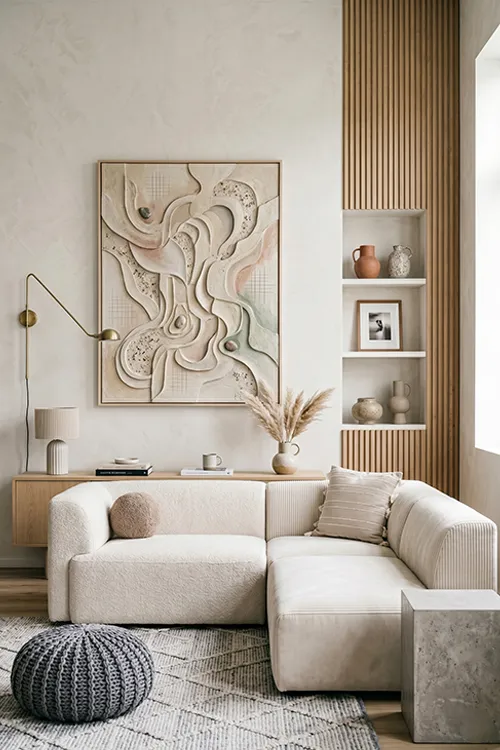
Movement feels easier here. You walk through without adjusting your steps, without brushing past things that don’t need to be there. The room holds a steady rhythm—nothing crowded, nothing out of place, just a sense of balance that feels effortless.
In minimalist home decor, furniture isn’t about filling space. It’s about giving shape to it, so the room stays open—and nothing gets in the way.
8. Letting Natural Light Lead the Room
Morning light has a way of entering quietly, slipping through sheer curtains and settling across the room in soft layers. It doesn’t demand attention—it reveals. Surfaces feel lighter, corners open up, and the space begins to shift with the day. You don’t even realize you’re noticing it at first, the way everything looks a little softer, a little more at ease.
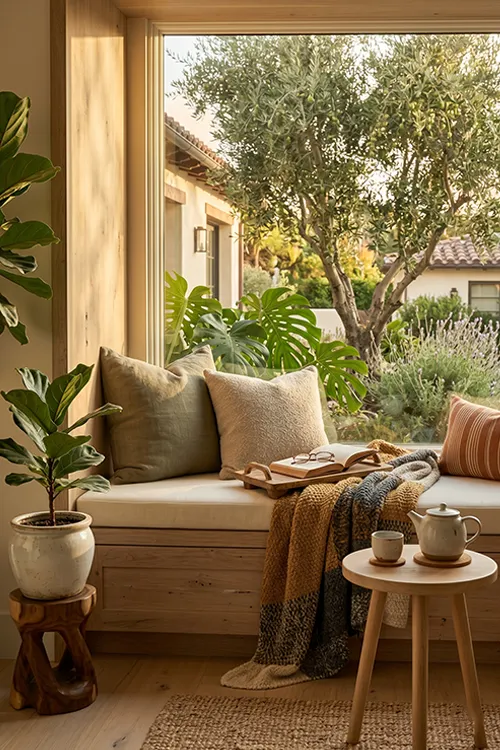
As the hours pass, that light changes its tone. By evening, it fades into a warmer glow, casting gentle shadows that make the room feel more intimate. Lamps replace sunlight, but the feeling stays easy, unhurried, almost reflective.
In minimalist home decor, light becomes something you live with, not just something you turn on. You start to notice it more in the evening. By then, it feels different. Slower. More settled.
Light, sheer curtains can make a noticeable difference here—letting in natural light while softening how it fills the room.
9. The Hidden Side of a Calm Home
What you don’t see often matters more than what you do. Behind the calm surfaces, there’s a simple structure holding everything in place—drawers that close easily, baskets that gather what would otherwise scatter, shelves that keep things accessible without being visible. The room remains clear not because nothing exists, but because everything has somewhere to go.
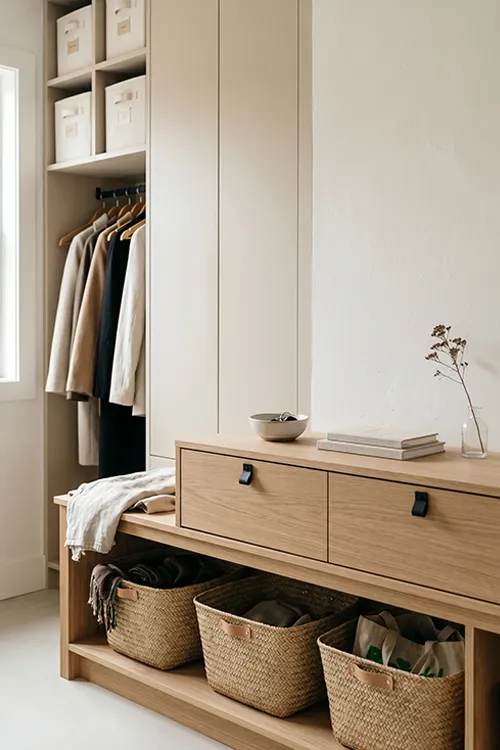
These invisible systems remove small frictions from your day. You reach for what you need without searching, put things away without thinking, move through the space without interruption. A steady rhythm starts to take over, one that supports your routine without drawing attention.
In minimalist home decor, organization isn’t about perfection. It’s about creating a background that stays out of the way, so the space—and your mind—can remain steady and uncluttered.
Woven storage baskets are a simple way to keep things tucked away while still feeling part of the space.
10. Decorating Without Overdecorating
There’s a difference between filling a space and letting it speak. A single object on a shelf—a book you return to, a ceramic piece you picked without overthinking—can hold more presence than a row of carefully styled decor. When there’s less to look at, what remains begins to feel more personal, more intentional.
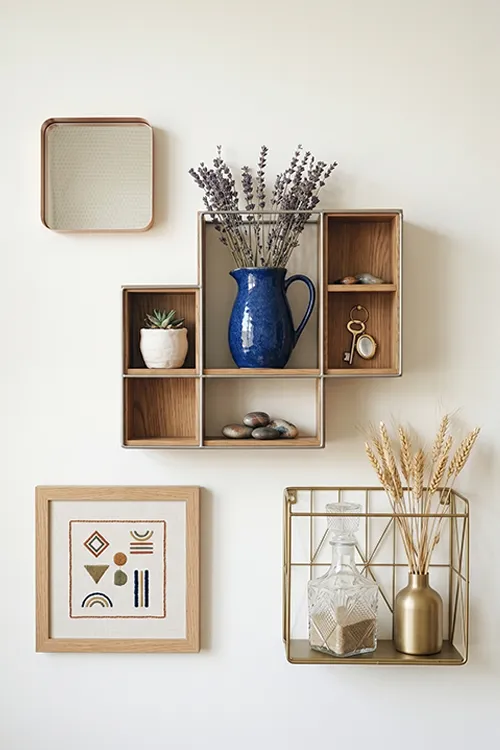
It’s easy to recreate what you’ve seen elsewhere, to mirror a perfectly arranged room down to the smallest detail. But something gets lost in that repetition. A home starts to feel staged instead of lived in, familiar but not yours.
In minimalist home decor, decoration becomes more understated. It reflects your rhythm, your memories, your everyday moments—without trying to match anyone else’s idea of beautiful.
Even a single ceramic vase can be enough—something small that feels personal without filling the space unnecessarily.
11. How Minimalist Home Decor Changes Your Routine
The change shows up quietly in the way your day begins. Mornings move more slowly, not because you have more time, but because your attention isn’t being pulled in different directions. You reach for what you need without searching, move through familiar spaces without friction, and the day starts on a slower note.
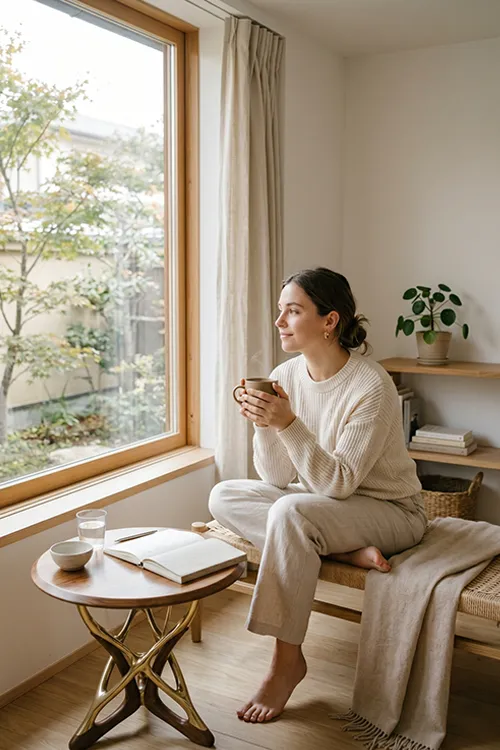
There’s less to decide, less to manage, less to process in the background. Surfaces stay clear, routines feel simpler, and your energy isn’t scattered before the day even unfolds. Your home stops asking things from you—and starts giving something back to you.
Over time, that shift settles deeper. You notice moments more—the way light moves across the room, the stillness in the evening, the ease of being present without distraction. Minimalist home decor becomes less about how your home looks, and more about how your life flows within it.
12. A Home That Feels Like a Reset
By the end of the day, your home starts to feel less like a place you manage and more like somewhere you return to. The clean surfaces, the softened light, the space that holds only what matters—it all works gently in the background, creating a sense of ease you don’t have to think about. You step inside, and something in you slows down.
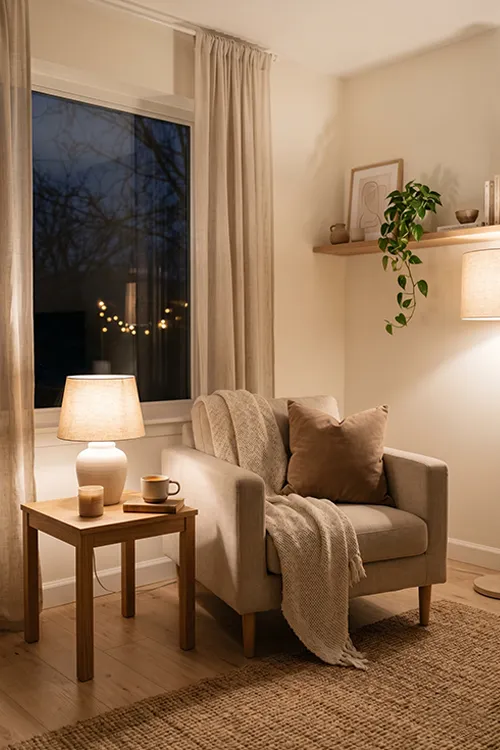
There’s a subtle comfort in knowing nothing is competing for your attention. It holds a steady, supportive feeling—almost restorative. It doesn’t ask you to fix or rearrange anything—it simply allows you to be, exactly as you are in that moment.
This is where minimalist home decor settles in fully. Not as a style, but as a feeling your home gives back to you—clear, calm, and gently grounding, the moment you step back inside and everything settles back into place.
FAQ
What is minimalist home decor really about?
It’s less about owning fewer things and more about being intentional with what you keep. Minimalist home decor focuses on creating a space that feels clear, balanced, and easy to live in—where everything has a purpose and nothing feels overwhelming.
Will my home feel empty if I go minimalist?
Not at all. When done thoughtfully, a minimalist space feels warmer, not emptier. Texture, light, and a few meaningful pieces bring depth and comfort, so the space feels lived in rather than bare.
Where should I start if my space feels cluttered?
Start small. Choose one area—a table, a shelf, a corner—and clear it with intention. Notice how it feels afterward. That shift often makes it easier to continue, one space at a time, without feeling overwhelmed.
Can minimalist decor work for everyday, busy homes?
Yes. Minimalist home decor isn’t about perfection—it’s about making daily life easier. Simple systems, thoughtful placement, and fewer distractions can actually make a busy home feel more manageable and calm.
A Home That Stays With You
A home like this doesn’t happen all at once. It builds quietly, through small choices you begin to trust—what to keep, what to let go of, what actually makes your day feel easier. Over time, those choices shape a space that feels steady, familiar, and entirely your own.
You start to notice the difference in simple moments. The way your mornings begin without rush. The way evenings settle without effort. The way being at home feels less like something to manage, and more like somewhere you can return to without resistance.
Minimalist home decor isn’t about reaching a finished version of your space. It’s about creating a place that continues to support you—softly, consistently, and without asking for more than you’re willing to give.